The full form of BCA is Bachelors in Computer Application. BCA is a three year undergraduate degree programme for candidates wishing to delve into the world of Computer languages. One of the most popular options to get started with a career in Information Technology, the course gives you an insight into the world of computers and its applications.
A BCA degree is considered to be at par with a BTech/BE degree in Computer Science or Information Technology. The degree helps interested students in setting up a sound academic base for an advanced career in Computer Applications.
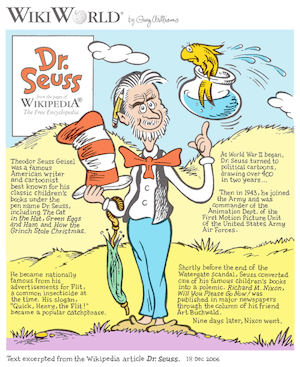
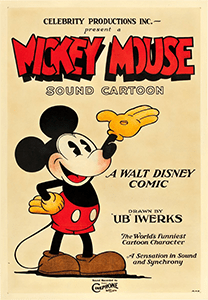
A cartoon is a type of illustration that is typically drawn, sometimes animated, in an unrealistic or semi-realistic style. The specific meaning has evolved over time, but the modern usage usually refers to either: an image or series of images intended for satire, caricature, or humor; or a motion picture that relies on a sequence of illustrations for its animation. Someone who creates cartoons in the first sense is called a cartoonist,[1] and in the second sense they are usually called an animator.
The concept originated in the Middle Ages, and first described a preparatory drawing for a piece of art, such as a painting, fresco, tapestry, or stained glass window. In the 19th century, beginning in Punch magazine in 1843, cartoon came to refer – ironically at first – to humorous illustrations in magazines and newspapers. Then it also was used for political cartoons and comic strips. When the medium developed, in the early 20th century, it began to refer to animated films which resembled print cartoons.[2]
A cartoon (from Italian: cartone and Dutch: karton—words describing strong, heavy paper or pasteboard) is a full-size drawing made on sturdy paper as a design or modello for a painting, stained glass, or tapestry. Cartoons were typically used in the production of frescoes, to accurately link the component parts of the composition when painted on damp plaster over a series of days (giornate).[3] In media such as stained tapestry or stained glass, the cartoon was handed over by the artist to the skilled craftsmen who produced the final work.
Such cartoons often have pinpricks along the outlines of the design so that a bag of soot patted or “pounced” over a cartoon, held against the wall, would leave black dots on the plaster (“pouncing”). Cartoons by painters, such as the Raphael Cartoons in London, and examples by Leonardo da Vinci, are highly prized in their own right. Tapestry cartoons, usually colored, were followed with the eye by the weavers on the loom.[2][4]
A cartoon (from Italian: cartone and Dutch: karton—words describing strong, heavy paper or pasteboard) is a full-size drawing made on sturdy paper as a design or modello for a painting, stained glass, or tapestry. Cartoons were typically used in the production of frescoes, to accurately link the component parts of the composition when painted on damp plaster over a series of days (giornate).[3] In media such as stained tapestry or stained glass, the cartoon was handed over by the artist to the skilled craftsmen who produced the final work. Such cartoons often have pinpricks along the outlines of the design so that a bag of soot patted or “pounced” over a cartoon, held against the wall, would leave black dots on the plaster (“pouncing”). Cartoons by painters, such as the Raphael Cartoons in London, and examples by Leonardo da Vinci, are highly prized in their own right. Tapestry cartoons, usually colored, were followed with the eye by the weavers on the loom.[2][4]
This pan Indian festival, famous for lighting up our lives, Diwali is joyously celebrated globally now. Sending a powerful message of the triumph of good over evil, the festival is celebrated in every nook and corner of the country. People enjoy the festival of lights by beginning the day with an auspicious pooja, followed by welcoming the night with new traditional clothes, sweets and glowing deeyas. The houses are decorated with garlands of electric lights and colourful rangolis. Ignite the light of brotherhood and goodness in you being through the festival of Diwali. Best Places to Celebrate Diwali:
A festival is an event ordinarily celebrated by a community and centering on some characteristic aspect of that community and its religion or cultures. It is often marked as a local or national holiday, mela, or eid. A festival constitutes typical cases of glocalization, as well as the high culture-low culture interrelationship.[1] Next to religion and folklore, a significant origin is agricultural. Food is such a vital resource that many festivals are associated with harvest time. Religious commemoration and thanksgiving for good harvests are blended in events that take place in autumn, such as Halloween in the northern hemisphere and Easter in the southern.
New-energy vehicles accounted for just under 4.5% of global passenger vehicle sales last year, according to BloombergNEF.
One of the first things visitors to the southern Chinese city of Liuzhou notice is the quiet. Missing is the incessant noise of throbbing engines and clashing gears that provides the backdrop to daily life in most metropolises around the globe.
The reason: almost 30% of the cars sold in Liuzhou last year were electric, according to WAYS Information Technology, a Guangzhou-based consulting firm, more than five times China’s average — making the city of 4 million the effective capital of the biggest EV market in the world. Globally, it trails only Oslo for electric-vehicle penetration. Not only that, but Liuzhou’s air and water quality is among the best in a nation synonymous with choking pollution
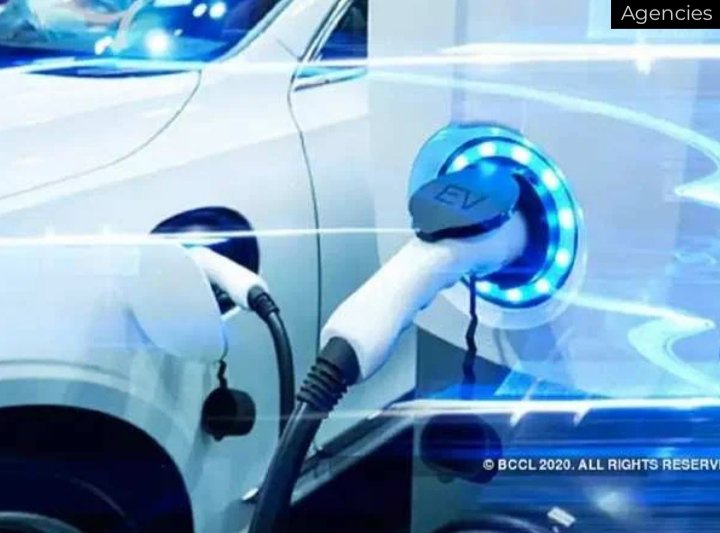
This green dividend is an unexpected bonus of a push by city authorities to make Liuzhou an EV manufacturing hub, and a concerted effort to overcome concerns over range, reliability and battery safety that have held back electric car take-up globally. Working with local carmaker SAIC-GM-Wuling Automobile Co. — whose tiny, dirt cheap EV has been China’s top seller for most of the past nine months, beating even Tesla Inc. — they also rolled out a slew of incentives, from extensive test drives to free parking and tens of thousands of charge points, to encourage people to buy electric cars.
It’s an approach that may provide a blueprint for other cities around the world as they try and convince drivers to give up their gas guzzlers to meet ambitious emissions targets.
While governments from Germany to the U.S. offer subsidies on EV purchases, sales still lag well behind those for conventional cars outside of a few pockets in Europe like Norway and Sweden. Liuzhou’s strategy may also be instructive for legacy automakers like General Motors Co. and Volkswagen AG, which are pumping tens of billions of dollars into a high-stakes bet that the future is electric. New-energy vehicles accounted for just under 4.5% of global passenger vehicle sales last year, according to BloombergNEF.
“At the beginning, people had many concerns about EVs, such as safety or the convenience of charging,” Gou Yi, a deputy chief at Liuzhou’s branch of the National Development and Reform Commission, China’s top economic planner, said in an interview. “What we did was to make sure our citizens felt it’s very comfortable to use EVs. People have realized how economical and easy electric cars are, and how much cleaner our air has become after more and more EVs hit the roads.”
Liuzhou’s first move was to expose wary residents to EVs. SAIC-GM-Wuling, a joint venture between U.S. giant General Motors and state-backed SAIC Motor Corp. and Guangxi Automobile Group Co., carried out a free 10-month test-drive campaign in 2017. More than 15,000 people took the automaker’s Baojun E100 for a spin, providing the company with 12,000 items of feedback. The trial was so popular that available slots ran out within minutes, and 70% of test-drivers bought one of the vehicles.
Wuling then studied residents’ needs and driving habits, tailoring the Baojun E100 for a daily commute of less than 30 kilometers (19 miles). The pint-sized two-seater — about half the length of a Tesla Model X and similar in appearance to the Smart car — comes with a similarly small price tag of around $5,000. That not only helps lower the bar for ownership, but reduces running costs such as insurance.




 Urvi Aajugiya